Children’s Book Illustrator: How a Simple Sketch Slowly Becomes a Storybook Scene
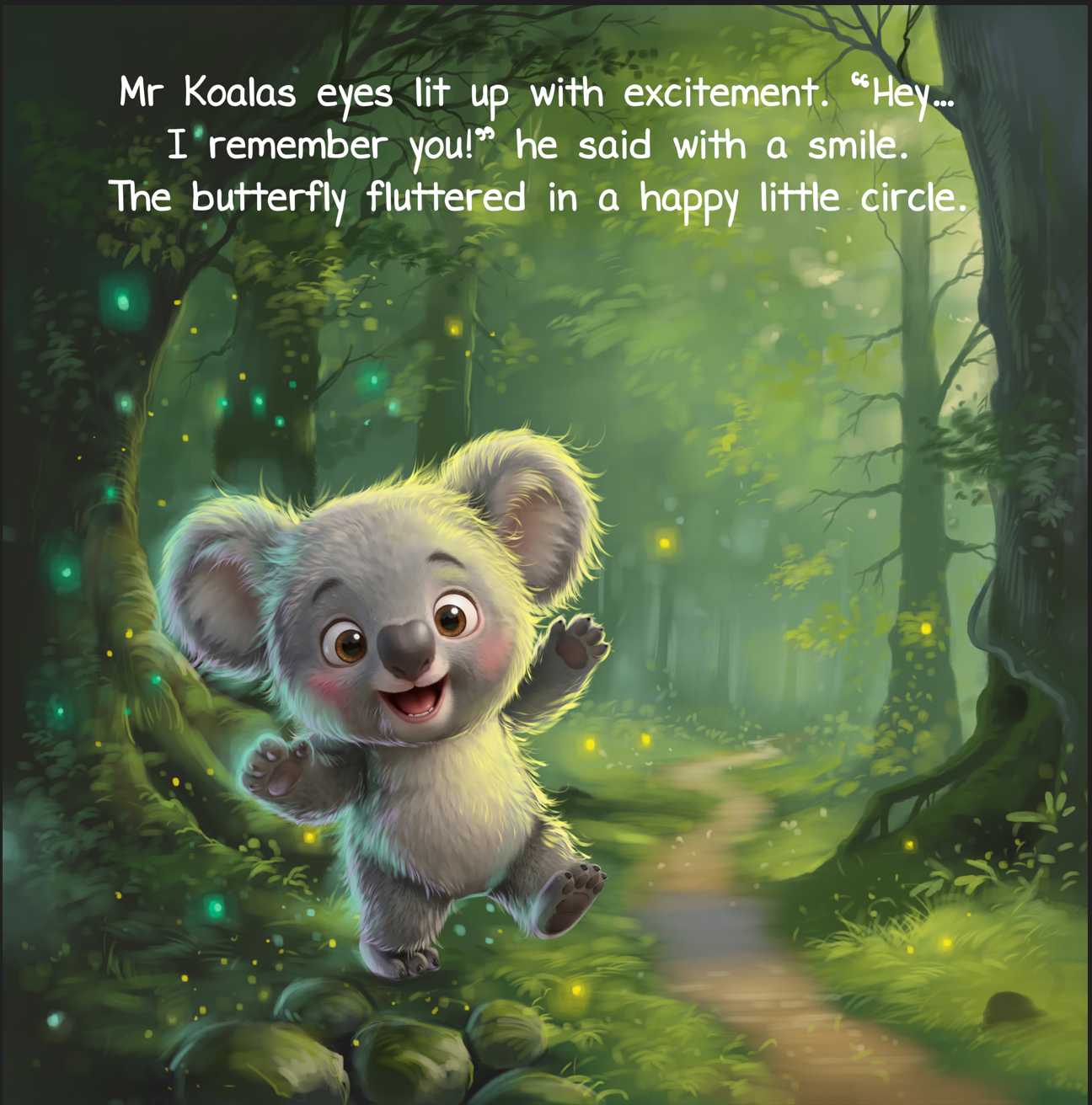
Most people only see the finished illustration inside a children’s book. They see the polished colors, glowing lights, cute characters, and detailed background. What they usually never see is the messy beginning.
For me, that beginning is often the most important part.
After working for more than 15 years as a professional children’s book illustrator, I have realized something very simple — strong illustrations are not built by rushing. They grow slowly, piece by piece, until the artwork finally starts feeling alive.
This forest koala illustration was exactly like that.
When I first opened the blank canvas, there was nothing magical about it. Just rough pencil lines and an unfinished character standing in empty space.
But honestly, that is how almost every good children’s book illustration begins.
The Character Always Comes First
Before adding trees, grass, glowing lights, or background details, I always focus on the character.
In the first sketch, the koala looked very basic. No textures. No colors. No atmosphere.
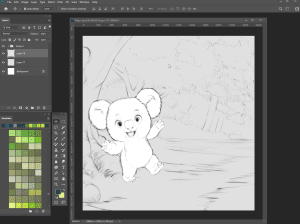
At that stage, I only cared about one thing:
“Does this little character feel friendly enough for children to instantly like him?”
That question matters more than technical details.
Children react to emotion first. They notice expressions before they notice color palettes or background painting. Even a small change in the eyes or mouth can completely change how a character feels.
So I spent time adjusting the pose, ears, smile, and body movement until the koala finally started feeling playful.
I wanted him to look curious, energetic, and full of excitement, almost as if he had just wandered into a magical forest for the very first time.
Slowly Building the World Around Him
Once the character felt right, I started creating the environment around him.
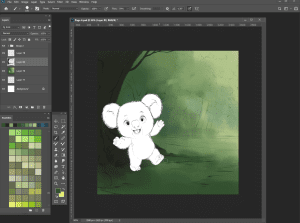
This stage always takes longer than people expect.
A forest scene may look natural in the final artwork, but while painting it, every little detail has to be considered carefully — where the light enters, how dark the corners should be, how much texture belongs on the ground, and how the trees guide the viewer’s eyes through the page.
In the earlier versions of this illustration, the forest looked soft and unfinished. Large areas were empty. The pathway barely existed.
That never worries me.
I actually enjoy this stage because it gives me freedom to experiment without pressure.
Sometimes I remove entire sections halfway through painting. Sometimes I repaint the same lighting area four or five times before it feels correct.
That happened several times in this project.
Why Organization Matters in Illustration
One thing many people do not think about is how much organization matters in professional children’s book illustration.
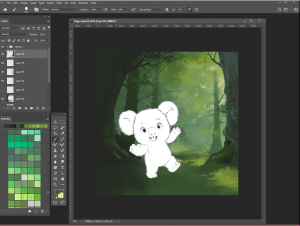
Inside Photoshop, I keep shadows, lighting, textures, characters, and background elements separated into different layers. It may sound boring, but it saves enormous time later.
Authors and publishers often request adjustments during production.
Maybe the lighting feels too dark.
Maybe the background needs warmer greens.
Maybe the pathway should move slightly left.
If the artwork is properly organized, these changes become manageable instead of stressful.
Being a children’s book illustrator is not only about creativity. Professionalism matters too. Delivering quality work on time is just as important as drawing skills.
Creating Atmosphere with Light
Lighting completely changed this illustration.
At first, the forest felt flat and quiet. The moment warm light entered the scene, everything started feeling more alive.
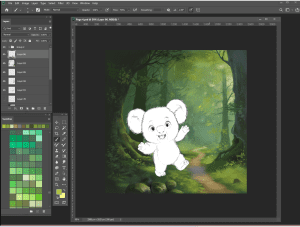
I painted soft sunlight filtering through the trees because I wanted the environment to feel magical without becoming overwhelming. Young readers should feel curious while looking at the page, not uncomfortable.
That balance is important in children’s book illustrations.
Too much darkness can make an image feel heavy. Too much brightness can remove depth and mood.
So I kept adjusting the lighting carefully until the forest finally felt calm, warm, and adventurous at the same time.
The glowing fireflies were added later in the process. Those tiny details may seem unimportant, but they help create movement inside the artwork.
They also add a little mystery.
The Details Children Remember
Toward the final stage, I focused on smaller details.
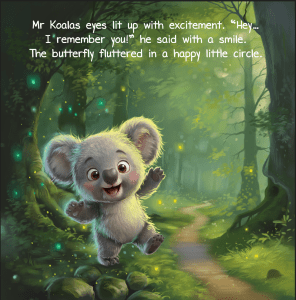
I added texture to the mossy ground, softened some shadows, and placed tiny highlights inside the koala’s eyes.
Those highlights changed the entire expression.
Suddenly the character no longer looked like a drawing. He started feeling alive.
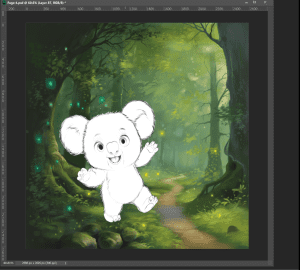
That is one of my favorite moments during illustration work — when a character begins showing personality without needing words.
Children notice those emotional details immediately.
In my experience, they rarely care whether an illustration is technically perfect. What they remember is how it made them feel.
That is why atmosphere matters so much to me while illustrating childrens books.
I want children to pause on a page and imagine themselves walking beside the character.
Maybe the koala is searching for something hidden deep inside the forest.
Maybe he is beginning his very first adventure.
I prefer leaving space for imagination because children naturally create their own stories while looking at illustrations.
Final Thoughts
After spending more than 15 years creating children’s book illustrations, I still enjoy the slow process of building a scene from nothing.
A blank canvas can feel intimidating in the beginning, but little by little the story begins to appear — first through rough sketches, then lighting, then atmosphere, and finally emotion.
That transformation is what keeps me passionate about this work.
As a professional children’s book illustrator, my goal has always stayed the same: create artwork that feels warm, memorable, and emotionally honest for young readers.
Because long after children forget certain words from a story, they often remember the illustrations that made them dream.
To know more: www.anantaart.com
Pinterest: https://in.pinterest.com/illustratorananta/
Behance: https://www.behance.net/ananta-mohanta
Follow me on Instagram: www.instagram.com/ananta_mohanta_
X: https://x.com/AnantaMohanta6
Leave a Reply