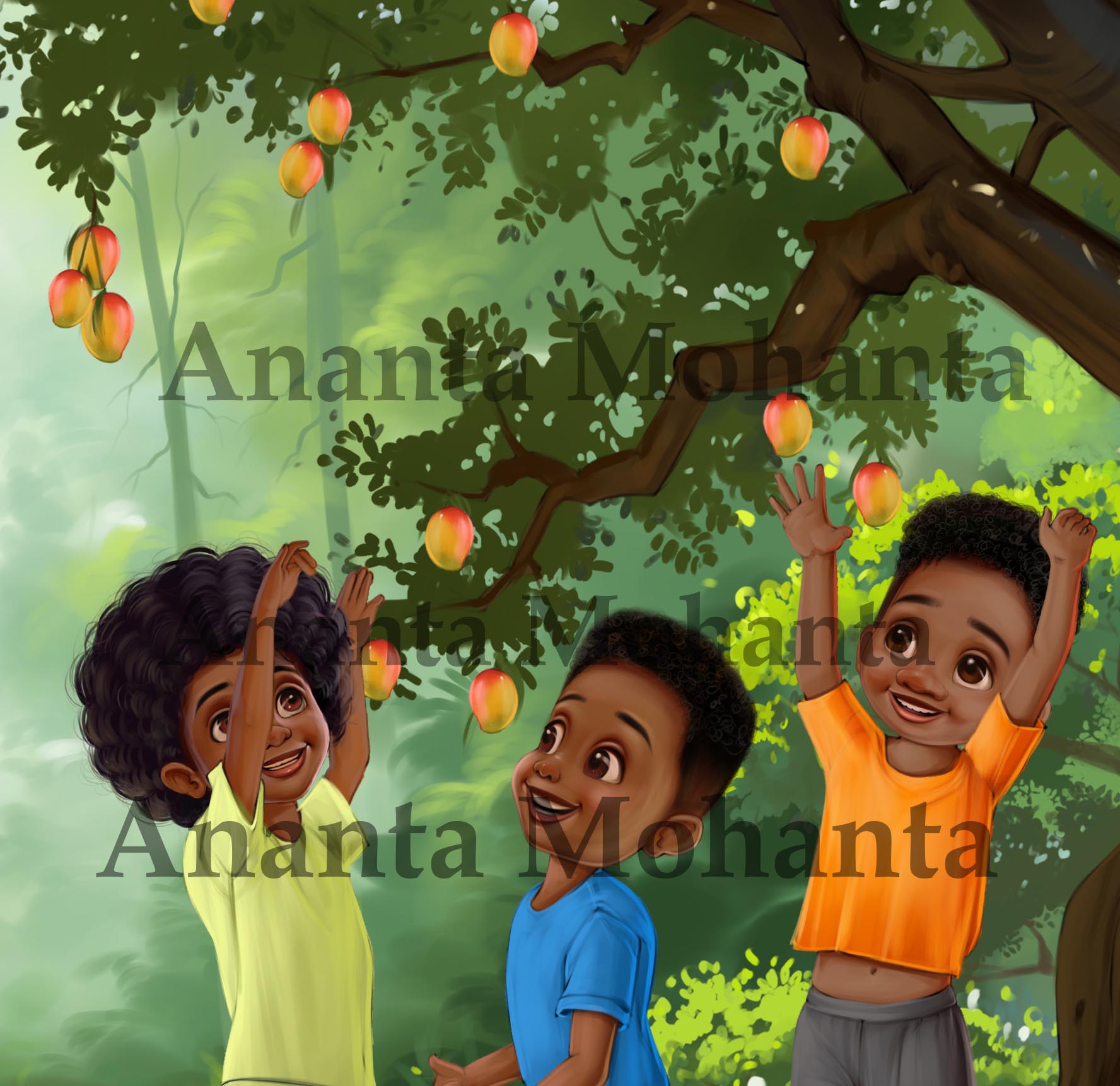
Fifteen Years as a Children’s Book Illustrator: Insights on Story, Trust, and Quality
When people hear that I’ve been working as a Children’s Book Illustrator for more than fifteen years, they often assume I’ve mastered drawing styles, tools, and techniques. That part is true. But what I really learned over the years has very little to do with software or brushes.
I learned how stories actually work.
I’m Ananta Mohanta, a freelance children’s book illustrator, and most of what I understand about storytelling came from real projects — unfinished manuscripts, late-night revisions, honest feedback, and watching how children react to pictures more than words.
At the Beginning, I Focused Too Much on Art
In my early years, I cared deeply about how my illustrations looked on their own. I wanted every page to feel impressive. Strong colors. Clean composition. Attractive characters.
But slowly, I noticed something uncomfortable. Some illustrations looked good, yet the story felt flat. Children flipped pages quickly. Parents didn’t linger. The book worked visually, but not emotionally.
That’s when I understood an important truth: a Children’s Book Illustrator doesn’t exist to show skill. The job is to support the story quietly, even if that means holding back.
Storytelling Is About Emotion, Not Explanation
One thing children are very good at is sensing emotion. They don’t need everything explained to them. They feel stories.
Over the years, I learned that illustrations don’t need to explain every action. They need to reflect on how a moment feels. A pause. A hesitation. A sense of excitement or fear.
Now, when I illustrate, I ask myself simple questions:
Is this moment loud or quiet?
Is the character confident or unsure?
Should this page feel fast or slow?
This mindset completely changed the way I work as a professional children’s book illustrator.
Characters Are the Heart of Any Children’s Book
Children remember characters long after they forget plots.
As a Children’s Book Illustrator, I’ve learned that characters must feel consistent and honest. If a character suddenly behaves differently just to look cute, children notice. They may not explain it, but they disconnect.
I spend a lot of time developing characters before final illustrations begin. Their posture. Their habits. The way they react to small situations. These details create trust between the child and the story.
Trust is storytelling’s foundation.
Cost Decisions Affect Story Quality More Than People Realize
Many authors searching for a children’s book illustrator for hire ask about cost first. That’s natural. Publishing a book is a big step.
From my experience as a freelance children’s book illustrator, I’ve seen that when cost becomes the only concern, storytelling suffers. Pages get rushed. Revisions are avoided. Visual consistency weakens.
At the same time, storytelling doesn’t improve just because a project is expensive. What really matters is communication and trust.
When authors and illustrators trust each other, the story has space to improve. That space is where good storytelling happens.
Not Every Page Needs to Be Busy
Earlier in my career, I believed every page needed to be full. Backgrounds, textures, details everywhere.
Children taught me otherwise.
Children enjoy calm moments. Empty space gives them room to imagine. Some of the strongest storytelling happens when an illustration doesn’t try too hard.
As a Children’s Book Illustrator, learning when not to draw was one of the most valuable lessons of my career.
Consistency Creates Comfort for Young Readers
Children are extremely sensitive to visual changes.
If a character’s size shifts or colors suddenly change, children feel uneasy. They might not say why, but their attention drifts.
Over the years, I’ve learned to protect consistency in character design, color tone, and visual rhythm. This consistency creates comfort, and comfort allows children to stay inside the story.
This is something people often overlook when they hire children’s book illustrators, but it directly affects storytelling quality.
Listening Changed Everything for Me
Some of my best projects didn’t start with drawing. They started with listening.
Every author has a reason behind their story. Sometimes it’s personal. Sometimes it’s quiet. When a Children’s Book Illustrator listens carefully, illustrations naturally become more meaningful.
I no longer rush to impose ideas. I ask questions. I wait for clarity. That patience improves the final story more than any shortcut ever could.
Advice for First-Time Authors
If you’re publishing your first book and looking for a freelance children’s book illustrator, here’s what my experience suggests:
Don’t rush the process.
Choose someone who values storytelling over speed.
Look for communication, not just samples.
Illustration is not a service you buy. It’s a collaboration you build.
What These Years Really Gave Me
After fifteen years as a Children’s Book Illustrator, I don’t measure success by how detailed my illustrations are.
I measure it by how long a child stays on a page.
By whether a character feels familiar.
By whether the story feels calm, exciting, or comforting when it should.
Storytelling isn’t loud. It’s careful. It’s patient. It’s honest.
And that’s what these years taught me — slowly, quietly, one book at a time.
To know more: www.anantaart.com
Pinterest: https://in.pinterest.com/illustratorananta/
Behance: https://www.behance.net/ananta-mohanta
Follow me on Instagram: www.instagram.com/ananta_mohanta_
Leave a Reply