What Really Goes Into Designing Characters for Freelance Children’s Book Illustration
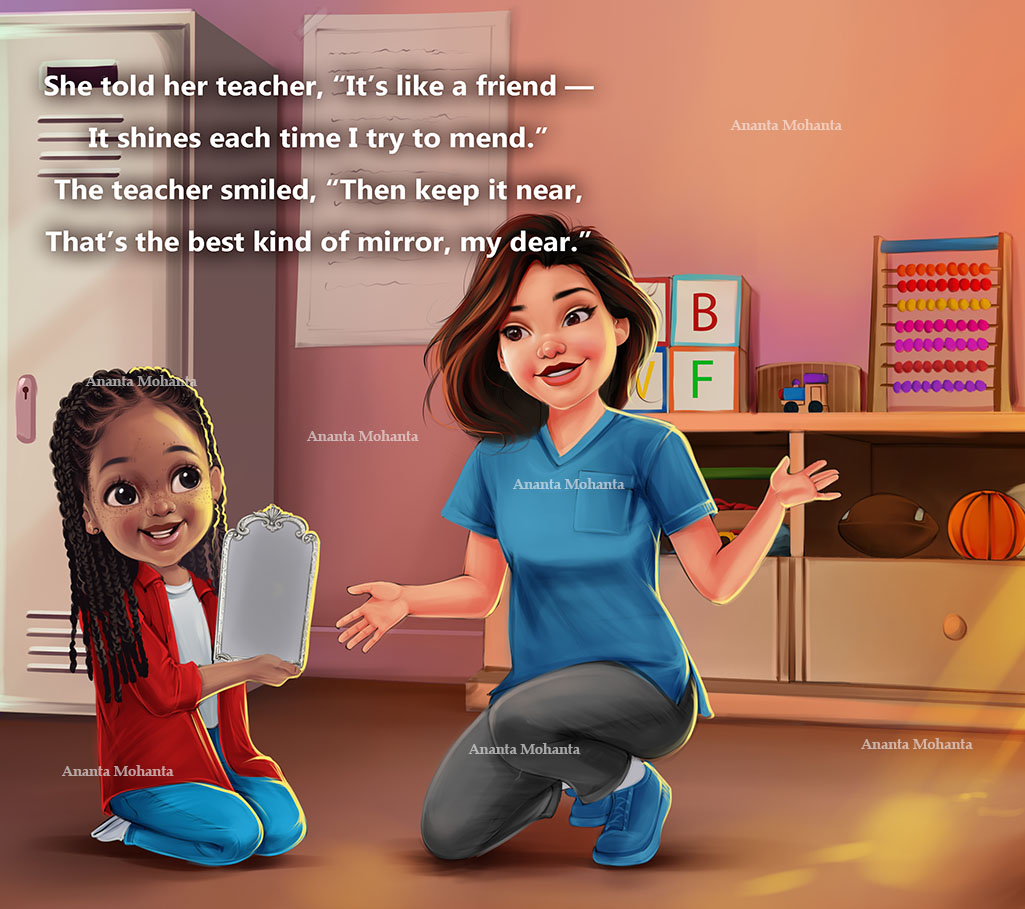
If you open a children’s book after many years, chances are you won’t remember every line of text. But you will remember the character. That one face, that one expression, the way they stood or smiled — it sticks.
That’s why, in freelance children’s book illustration, character design is not just a step in the process. It’s the part that quietly carries the whole book.
I’ve been doing this for years, and even now, I don’t treat character design lightly. It’s never just “draw something nice.” There’s always more going on behind it.
I Don’t Start with Drawing Anymore
This might sound strange, but I don’t begin with sketches.
I sit with the story first.
Even a simple children’s story has a certain feeling to it. Some feel warm and calm. Some feel playful and fast. Some have a bit of emotion hidden underneath.
If I don’t catch that feeling, the character comes out wrong — even if the drawing looks good.
So I read. Sometimes twice. Not in a hurry.
In children’s book illustration, the drawing part comes later than most people expect.
The Character Has to Feel Like a Person
One thing I’ve learned over time — if I don’t understand the character, I can’t draw it properly.
Not just what they look like, but how they behave.
Are they the kind who jumps into things without thinking? Or the kind who watches quietly from the side?
These things change everything. Even posture.
A confident character stands differently. A shy one almost folds into themselves a little.
In freelance children’s book illustration, these small details matter more than adding extra design elements.
I Keep the Design Clear, Not Busy
There was a time when I used to add a lot of details. Patterns, textures, small decorative things everywhere.
It felt like I was doing more work, so it must be better — that’s what I thought.
But it didn’t help.
Children don’t respond to complexity the way adults do. They respond to clarity.
Now I simplify things. Clean shapes. Clear silhouettes. Something you can recognize quickly.
In children’s book illustration, if a character is easy to read, it becomes easier to remember.
Expressions Do Most of the Work
If there’s one thing I focus on the most, it’s expression.
You can get everything else right — colors, proportions, style — but if the face feels blank, the character falls flat.
I spend time adjusting small things. The tilt of the eyes, the spacing, the curve of the mouth.
Sometimes I draw the same face again and again until it feels right.
Children connect through emotion, not technique. That’s something every children’s book illustrator learns sooner or later.
Drawing the Same Character Again and Again Is the Real Challenge
Creating a character once is not the hard part.
Keeping it consistent across 20 or 30 illustrations — that’s where things get tricky.
Different angles, different poses, different scenes… but it still has to feel like the same character.
In freelance children’s book illustration, I usually make a rough guide for myself. Nothing complicated. Just a few reference sketches to stay on track.
Without that, the character slowly starts to change without you noticing.
Working with Authors Is Part of the Process
Every project comes with a different kind of author.
Some have very clear ideas about how their characters should look. Others give full freedom.
I’ve worked with both, and honestly, both are good in their own way.
What I always try to do is share rough ideas early. Not finished artwork — just basic sketches.
It keeps things flexible. If something feels off, it can be corrected easily at that stage.
In freelance children’s book illustration, waiting too long to show work can create problems later.
You Have to See It Through a Child’s Eyes
This is something I remind myself often.
It’s easy to get carried away trying to make something “look good” from an artist’s point of view.
But that’s not who the book is for.
A child looks at things differently. They don’t analyze. They react.
So I ask myself simple things:
Is it clear?
Is it friendly?
Is it interesting enough to hold attention?
In children’s book illustration, simple emotional connection is more important than technical perfection.
Style Is Not the Starting Point
A lot of people think style comes first. I don’t see it that way anymore.
Style grows over time. It shows up naturally in your work.
But when I’m working on a book, I don’t force a specific look just to match a style.
The story decides the direction. Some stories need softer visuals. Some need something more bold or playful.
In freelance children’s book illustration, being flexible actually helps more than sticking to one fixed style.
Closing Thoughts
At the end of the day, character design is not about drawing something attractive. It’s about creating something that feels real within the world of the story.
If the character works, everything else becomes easier — the scenes, the storytelling, the flow of the book.
If it doesn’t, even the best artwork won’t fix it.
Ananta Mohanta is a freelance children’s book illustrator with over 15+ years of experience. He works with authors of various kinds from around the globe. He is best known for his high-quality children’s book illustrations, professionalism, and punctuality.
For those searching for children’s book illustrators for hire or planning to work with a freelance children’s book illustrator, it helps to know that strong characters don’t happen by chance.
They take time, observation, and a lot of quiet thinking before the first line is even drawn.
To know more: www.anantaart.com
Pinterest: https://in.pinterest.com/illustratorananta/
Behance: https://www.behance.net/ananta-mohanta
Follow me on Instagram: www.instagram.com/ananta_mohanta_
Leave a Reply